



|
 | |
| |
 |
|
 |
|
|
Revelation
 |
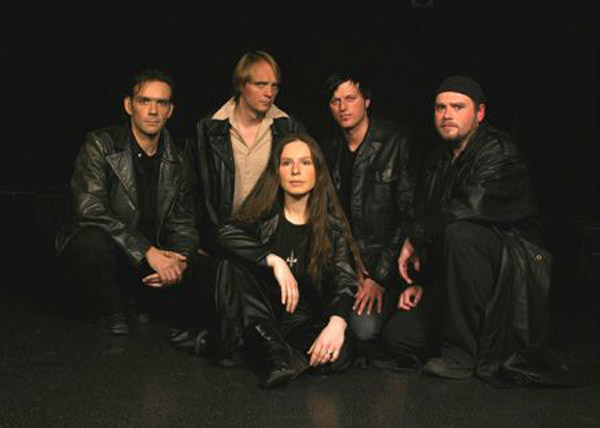
Drummer Uli Kusch has a lot of things to talk about, for over 20 years of his music career he appeared with such metal superstars as Holy Moses, Gamma Ray, Helloween and Masterplan. Unfortunately, it seems that he has never managed to find a real home in any of those bands, and now, at the age of 39, he starts life anew with his new project called Beautiful Sin. Masterplan fans won’t be surprised by the project’s first release “The Unexpected”, even though there is a female singer and no straightforward hits on it. But still this release made more than a good reason to talk to Uli. At least that’s what we thought when we requested the interview, but what we got as a result was Uli’s first official announcement of his departure from Masterplan. To say we were shocked is to say nothing. But that’s right what the title of Uli’s latest record suggests – the unexpected…
|

The AFM Records website says you came up with the idea to create Beautiful Sin in autumn 2004, when you were finishing the second Masterplan album. What made you create another band? Do you think that the material you released on “The Unexpected” does not fit Masterplan?
Well, that is open for discussion, I would say. There are a couple of songs I wrote a couple of years before and I always wanted to use them for something. I suggested those songs to Masterplan, but the majority just thought they don’t fit the concept, and there were other ideas we agreed on. In addition, I had some leftovers which I thought were too strong to be thrown away, and since I always wanted to do something with Magali (Luyten, vocals), I thought that’s the right time to use this material. It was also done to avoid too many discussions about arrangements and how the song structures are going to be like, I wanted to do a record that I think is right to do. And I am glad that some songs turned out very cool on the Beautiful Sin album, and they turned out quite different than I think they would have sounded if I had recorded them with Masterplan. I don’t think there is any competition between Beautiful Sin and Masterplan, it is just some material I had left and which I thought was pretty strong.
In a few interviews you said that Beautiful Sin is more like your solo album, but still you released it under a band name, not as a solo thing. What was the reason?
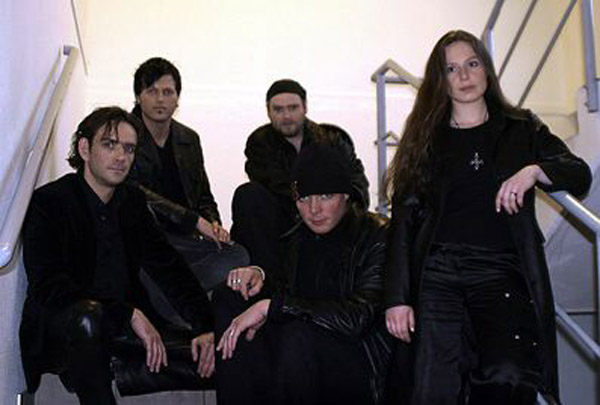
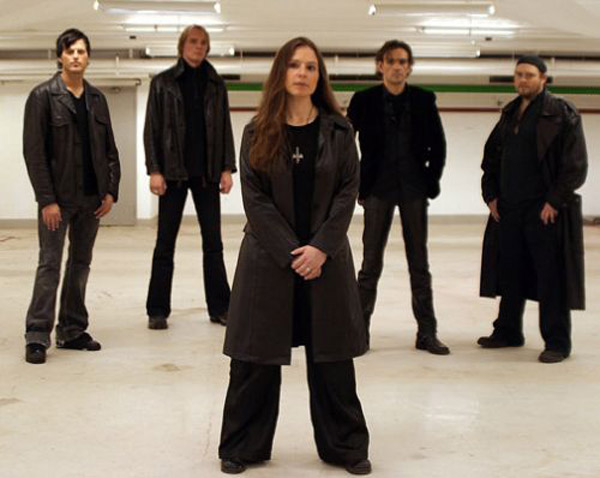
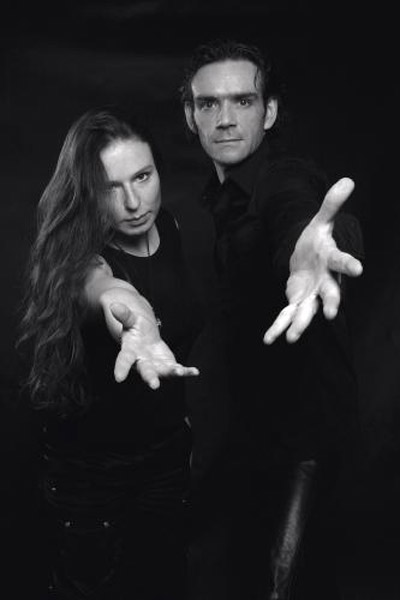
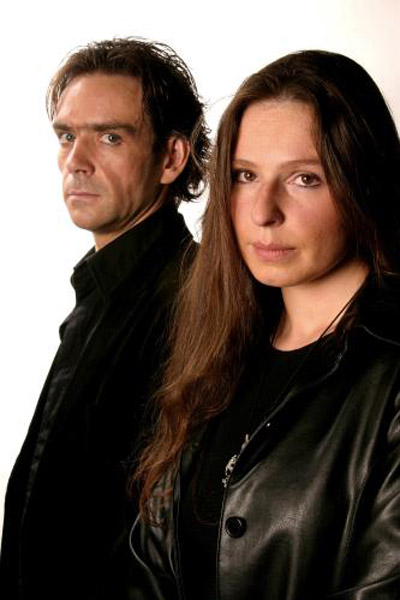
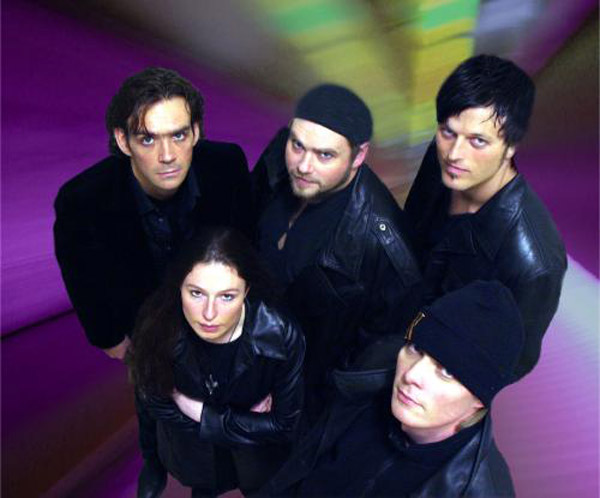
There were different thoughts about what to do with the whole thing. If you do a solo album, you just do it the way you want to, and you make decisions on your own about everything. But I thought about building a band, since Magali was free at that time, and the musicians I found for this record are great to record and tour with. During the recordings it turned out that this could be a cool band, and that there could also be some like activity and everything. I also made a couple of phone calls to record labels, talked to people about what could be the smartest way to release the album, and all the people I talked to felt that this sounds like a band. I still have a good contact with all the members who are involved in this album, and we are already making plans to play live next year, try to get some festivals or a support tour. It is all built from scratch, and it is all built around the song material which was there. I know Magali, she is very creative, Jorn Viggo Lofstad (guitar) and Axel Mackenrott (keyboards) are very creative, too, so I think the second album could be done much easier with having everyone involved in the songwriting. They know what the music should be about, we made it clear with the first album, so I see myself working with the same people on the second record under the same name. To me it appears more like a band than a solo project.
Why did you choose to work with female vocals this time? You haven’t done that since your days with Holy Moses…
That is very simple. I worked with Magali in 2002 on the album I recorded for her band in my small studio. On the first day I was listening to her voice, and I was like, “Wow, she sounds cool, she’s open minded, she’s so great to work with!” It’s a fantastic rock voice, and since that moment I wanted to do an album with her. When I had the song material in autumn 2004, I had a few singers in my head, it was all mixed up, but the first person I contacted was Magali, and she was interested right away. We recorded demos without any other intentions, and they turned out to be cool, and she fits into the music. Some people may say that I’m jumping on the bandwagon, that it’s just a marketing strategy to have a female vocalist in metal music, but that’s not what I think. The idea of a female voice in rock music is much older, artists like Lita Ford or Lee Aaron existed a long time ago. And as you can hear on the album, we don’t sound like Nightwish, there is none of that opera singing. I just can say that Magali is a great musician to work with, it’s a great pleasure.
You are a singer yourself, you sang a couple of songs on the Rainbow tribute album (“Catch The Rainbow”, 1999) and in Ferdy Doernberg’s musical “A Storyteller’s Rain” (2000). Shall we ever expect a full album with you as the lead singer?
I would love to, but then I would need to drink a couple of bottles of red wine. (everybody laughs)
Why not?! Go ahead!
No, my main focus right now is songwriting, I’m composing a lot, and my main instrument is drums. Everything else is just a tool to develop my ideas, I sing and play guitars on my demos, but that is just to have a good recording and made it clear to the people what my music is about. I personally don’t think that I’m a great singer, I had a few moments when I was singing and thought, “Well, that doesn’t sound too bad”, but I compare myself to real singers in bands who have had their main focus on singing for years, and then I think I would rather not do it! (everybody laughs) What I do most of the time is backing vocals. That is a lot of fun, and I love to do that – find different voices and make a choir set-up that’s interesting to do. That’s also good training for the voice.
We were quite surprised that Beautiful Sin features Jorn Viggo Lofstad, who played on the last two solo albums by Jorn Lande. How did you get Jorn Viggo in the band? Were you impressed by his playing on “Out To Every Nation” (2004)?
I was once listening to his main band Pagan’s Mind, and I thought, “Wow, that’s a great guitar player!” It didn’t took long before I found out that he actually works with Jorn Lande, so I asked Jorn for his number. We had a small conversation, I told him about my plans to do a demo with Beautiful Sin and asked him if he was interested in playing some solos on that. I am an OK rhythm guitarist, as I told you I play rhythm guitars on demos myself, but I needed someone to add the solos and create a complete picture of the songs. Thus, Jorn Viggo got the tapes, and in a week I got the tapes back with the solos on them. I was just blown away, I thought, “Wow, cool, that’s great!” Then we had a meeting, we were going through all the songs, discussing harmony changes and little details that could be altered, and he was very well prepared when we started the recordings. From there it just turned out to be cool to work with them.
Beautiful Sin is an international band – the singer is Belgian, you and Axel Mackenrott are from Germany, and the other two guys are Norwegian. How do you work on songs, and what language do you speak at rehearsals?
We use a kind of modern approach when it comes to preparations. We are not a band that has a practice room, we don’t meet to practice as a band, and we don’t develop ideas in the room. Instead, we have our computers and we are sending ideas by e-mail in the mp3 format. Everyone can take their time to listen to the material, get inspired, add something to it and send it back, so than another person can get inspired again. That’s the philosophy – what way of working you prefer, but I think it’s very modern and very effective to work like that. I live in Norway now, Axel lives in Hamburg, Magali lives in Belgium, and the other two guys live not too far from here, but still it’s three or four hours by car. It would be a lot of work to make a schedule, find a place where we can practice, and a place where we sit down for a month to write songs. And you also need money to organize all these things. But modern equipment makes it very comfortable and very easy to work out ideas. Everyone in the band is taking very good English, that’s not a problem, Magali speaks French as well, and since I used to live in Belgium, too, we talk a little French here and there, but basic conversations go in English.
You have been living in Norway yourself for a while. What made you leave Germany?
What made me leave Germany? Love. (laughs) And I think Norway is a very nice country, I like the countryside very much. Norway is big and open, it’s not so full of people, I like the mentality, and the language is not that difficult, because it has the same roots as the German language. I’ve been here for two years, and I’m pretty much getting into it now. I don’t talk yet, but I understand most of Norwegian, though it still differs from day to day – I have days when I understand everything, but I also have days when I just sit there and don’t have a clue. Everything goes slower here, but I see it as an advantage, because the country is a little more relaxed and not as busy as Germany.
“The Unexpected” opens with the song “Lost”, which is actually a new version of “The Departed (Sun Is Going Down)” with new lyrics. Why did you decide to redo that song? Were you dissatisfied with the way Helloween recorded it on “The Dark Ride” (2000)?
I was satisfied with the song that appeared on “The Dark Ride”. It is always like that – when you write by yourself, you always think differently until you get other musicians involved into the thing. They get inspired in a different way, and then things turn out to be different. In most cases development makes the song stronger, and I see that as a good helping tool to get an objective opinion on your thing. But when it comes to this song, the version you hear on the Beautiful Sin album is actually the original, that is the way I wrote the song eight years ago or something. I re-discovered the original long after “The Departed” was recorded, I was listening to it and I thought, “Wow, the vocal melodies here are pretty strong as well!” I could have made it much easier and write a different song around it, but the song structure is very modern, I think, even though it was written eight years ago. The guitar riffing and everything were perfect with that melody, and that was the reason why I recorded it again, now the way I wrote it. It is a different song, just like “Revelation” from “Better Than Raw” (1998), which turned out much better that the original version that I wrote. I don’t have a reason to re-record “Revelation”, but as to “The Departed”, I found out that the lyrics didn’t have a really deep meaning… Or let’s say that the version that appears on “The Unexpected” has a personal meaning for me, it’s about addictions and my personal experience with them. To me it’s much deeper now, and I’m very happy to have both versions.
The album also includes a track with rap vocals. Why did you decide to incorporate such unusual elements in your music?
In the 1990s bands like Clawfinger and Rage Against The Machine influenced me a lot, but I never had a song where I could use this type of singing. I always had this rhythm for the vocals in my head, and I was all mixed up whether it needs more melody or it should be a doom type of song. With this rhythm for the lyrics it was very easy to write these words, which are actually about a friend who’s always in trouble, who gets in trouble that no one else gets into. It’s a kind of funny and sarcastic interpretation of what happened to him. I think that rap kind of singing fits much better here than if it would have been a very dark song.
What are your expectations from “The Unexpected”? Do you want the album to become at least as big as Masterplan’s records, or is it more like another outlet for your creativity, and you don’t care about the popularity and sales that much?
(giggles) There’s always hope, and I just hope that as many people as possible are listening to the music I write. I would be happy if I sell more than Masterplan, but I wouldn’t be unhappy if we sell less. What I can expect is that we will sell much less than Masterplan, because the structure around it is a little bit different and not as intensive, if we look at promotion, I would say. But I think that the quality of music should spread over the years. I’m happy that this album is released, and I’m very thankful to AFM that we got the chance to do it. I’m very happy that Magali got a kind of platform – she had never had a release before (the record she did with Over Us Eden never came out – ed.), and I think that her voice is worth for the people to know. All in all, I’m very satisfied with the result, I like the sound, and I’m very happy to work with these people. The album is released, that’s the main thing, and all the rest will be clear after a while. I will know where I am with this album and with this band, and I will see what is possible to do with this line-up in the future. I’m very positive, because 85 to 90 percent of reviews are very positive, and that already makes me happy.
We were really surprised recently when we learned that you are the new drummer in Mekong Delta. How did you hook up with Ralph Hubert again? In January he told us he’s not in contact with any of his past bandmates anymore…
He was the first producer I worked with back in 1986, that was the recording of the “Finished With The Dogs” album with Holy Moses. His studio was located not far from my hometown, I was there a couple of times, and he invited me to play one song with Mekong Delta (the track was called “The Gnome” and can be now found as a bonus on “The Music Of Erich Zann” (1988) – ed.), since he liked my drum playing. It was not clear whether Jorg Michael (then Rage, later with Axel Rudi Pell, Running Wild, Saxon and Stratovarius – ed.) would be a Mekong Delta member at that time, and Ralf was also interested in having me as a band member. Since I came out of this technical progressive thrash type of music, but with a different type of vocals, of course, I was interested. But over the years my tastes changed, I got more into melodic hard rock and metal, with Gamma Ray the whole thing changed. Since then I never did something like Mekong Delta again, for 15 years I’ve been playing melodic heavy metal. I like this music, it is great to play, it is actually much simpler and not that exhausting. For technical thrash metal you need a lot of time to develop all these ideas that are here. But when I heard that Ralf wanted to reform Mekong Delta, I sent him an e-mail, I just said, “Wow, it’s great that you do Mekong Delta again! I’m really looking forward to hear the result.” And he called me back and asked me if I wanted to play on the record. I was very happy at that moment, I said, “Wow! Yes! Cool!” I hadn’t heard from him since 1988 or something like that, and it’s great that we work together again.
Could you compare the way you worked with Ralf in the time of “Finished With The Dogs” and the way you recorded drums for the new Mekong Delta album?
Twenty years ago I was a child, I didn’t have a clue, and now I know what I’m talking about – that’s the difference. (laughs) Now it’s more like the way we work with Beautiful Sin – me and Ralf have been sending back and forth the mp3 versions of songs, I got into the material and I developed drum arrangements, which are very unique, I would say. On this album you’re gonna find two songs that are so extravagant that in my 39 years I’ve never heard this type of music. The result is something very special. And 20 years ago I didn’t know how drum recordings are gonna be like, I came into the studio absolutely fresh, I never knew how to put a microphone into the bass drum, and I saw the mixing desk for the first time, so I was very much impressed by all the things around me. I just did what I’d been told and I played the way I was able to play, and that was actually the biggest learning period in my drum playing. Nowadays after having the input in all the bands that you played in, and listening to all kinds of different music, you get new inspirations and you get further in your abilities of developing cool grooves. I think now I pretty much better understand what Ralf’s music is about. And that is the biggest difference, I would say.
You now have your own studio in Norway, but according to your official discography, the only outside album you have produced so far is the one done by Magali’s band, Over Us Eden. Would you like to continue working with other bands as a producer?
Yes, absolutely, if I have the time and if I get inspired by this band. As to Magali’s band, some of its members were old friends of mine, we met again, they played their music to me, and I told them, “If you wanna record it, I have a studio, and we can talk about it.” We just started working together, and as a producer, I also bring myself into the music, I try to lift the whole thing up, take the most important ingredients and try to make them stronger. It is also up to the musicians I would work with – how open-minded they are to make something out of what they have. Although my studio is not a real big thing as you may imagine, it’s not a professional studio, it’s more like a home recording studio where you can record music in an up-to-date way. That’s possible with the equipment that I have. I used to have a big studio, and I just figured out that in this case you have a lot to take care of – all the technical aspects, rent, costs, etc., and as a result, a lot of my musical development got lost at that time. I decided I’d rather concentrate on songwriting than having a big studio, that’s my main focus. But of course, I’m still interested in producing all kinds of different music, I’m not stuck in metal or anything like that, I’m open minded, so whatever comes… why not?
You mentioned that you may play live with Beautiful Sin next year. Will it happen after you record the next album, or do you have a different plan for that? And are there any chances of seeing you live with Mekong Delta?
Yeah, that could be possible, too, we’re in discussions about it. But right now the album has not been finished, guitar recordings are in progress. All the bass guitar and drums are done, all the classical instruments are done, but it will also take a while before Ralf will decide on the right singer. We’ve already got offers to play some festivals, but we are thinking about it, and it all depends on our schedule next year. With Beautiful Sin it’s the same – I’m mixed up right now if I want to make the second record before playing live or we just go now, check it out, see how it works, and then use this live experience when we sit down and think what we can do better or what we can develop. I think the second record is definitely going to happen, but I don’t know yet when.
Speaking about live shows, we cannot but ask you about your impressions from playing in Russia. Your first trip here with Helloween in 2001 is now legendary, there are all kinds of rumors about your night trip from St. Petersburg to Moscow by train, and about your appearance at the Harley Davidson party where you played something like “Paranoid”. What kind of memories do you have about that trip?
Oh, that was very special. I talked about it just one week ago - this was a very intensive trip, and everything was different from what we used to have around us. I thought it was very special and great, we managed to spend two days in St. Petersburg and two days in Moscow, and the night trip that you mentioned was great. It was very interesting to see how people live, we met really nice people, unfortunately I don’t have contact with any of those acquaintances, but I’m sure that if I have a chance to play again in St. Petersburg or Moscow, I hope to meet some of them again.
The second time you came here with Masterplan was in 2003, and it was a big festival. But already at the soundcheck before you hit the stage we had a feeling that something was going wrong, there was a kind of nervousness on stage. And indeed, the sound was not quite perfect, and the concert was cut short. Can you tell us what actually happened?
I would really like to know that myself! If you talk about the soundcheck, I don’t remember it well now. Since Helloween were headlining, there were rumors that they cut off the power, but I don’t know whether it’s true. I know they had one guy working with them, who was the tour manager, and he wanted to be strict on schedule, but it was obvious that we were cut short of power five minutes before the end of the show, and other bands stretched the show 10 minutes longer. Why did it happen only with us? That was a little difficult to understand, at least. I would not say that this was the intention of Helloween or that they told the guy, “Hey, come and knock off the power”, but what happens still makes me think… Nevertheless, we had a cool gig, and it was a great show, as far as I remember. If we are cut off in the middle of the last song, I can live with this. I also remember that it was difficult to meet any of the Helloween guys I had worked with before, not even Markus Grosskopf showed up, that was a little odd, and it was not possible to get in contact with them at all. There was a little confusion and a little talk backstage about that. But on the other hand, it was a festival, we still meet and talk with them now and then. We recently played in the Czech Republic, and Helloween were headlining the day after we were playing. I stayed a day longer at the venue and I watched Helloween just to see how it is to see them. And right before them Gamma Ray played, it’s also one of my ex-bands, so it was very exciting to be there, see both bands, compare them, and live in memories a little bit. I met Markus there, we talked, and it was also great to meet new members, the guitarist and the drummer. That was a good experience.
A lot of people expected that Masterplan will play live the Helloween songs that you and Roland Grapow wrote, but only a small fragment of “The Departed” was played sometimes. Why don’t you ever play stuff like “Push” or “Mr. Torture”? We’re sure there are a lot of people who would love to hear them live…
That’s a difficult thing… Or is it difficult, I don’t know… (sighs) You know, we started Masterplan to be independent from Helloween, and I think it was important for the rest of the members who never had anything to do with Helloween to have their independence. In my point of view, Helloween is Helloween, and Masterplan is Masterplan, it’s that simple. Masterplan makes a certain kind of music, we write new material, and we now would have enough songs so that we would not need to play “Mr. Torture” or something like that. Roland suggested playing that, and we were talking about it, but there are other people in the band, and we have to take care of their opinion as well. “Mr. Torture” is not exactly the song that fits Jorn’s voice, so you have to decide what’s best, what’s smartest. It would have turned out to be a good version, definitely, and I guess people would have appreciated it. But on the other hand, we wanted to present the Masterplan picture, and make it clear that Helloween is Helloween, and Masterplan is Masterplan, they play their songs, and we play our songs. It is a chapter that is closed for me. I don’t talk to Roland, so for him it’s probably different, and if it were up to him, he would have probably still played those songs, but in Masterplan there are five members, there is a kind of democracy, and it should be the majority’s decision. If a song sounds a little odd in the Masterplan picture, I would not know why do it. On the first tour, during the first period of playing live with Masterplan, we didn’t have enough songs, and that was the reason why we added this medley of two Helloween songs and an Ark song to the set. It turned out to be cool, but it was not really fresh, and to play Masterplan songs appeared to be really refreshing. If you get stuck with the song material you are used to play for many years, it is… I would not say boring, but really not refreshing and exciting for the musicians. Of course, we know people’s opinion and we know what fans would love to hear, but how can you bring new songs into people’s minds if you don’t play them and play songs from the past instead?
Masterplan has already announced tour dates for next year, and a lot of people suggest that if you announce live shows, you already have a new singer. Are they true, or are you still searching for the right guy?
Right now I cannot say much about that because I’m not in Masterplan anymore.
Really??? You are not in Masterplan anymore???
I’m not in Masterplan anymore, and I guess you are the first ones who are hearing that. Actually I don’t know who is going to sing.
(shocked) But why?
Eeh… It would be very difficult to explain the whole thing, because it’s very fresh, it’s only been two weeks since I made the decision. I think we are going to make a kind of press statement about it soon, and I cannot… or I would rather not talk about the reasons behind the split. Things went wrong, but that’s the way it is in life, it was for me totally unexpected, but I had to make a clear decision. I’m gonna focus on different things now, so what the plans of Masterplan are, I don’t know.
Then the obvious question is what are these different things, what are your priorities now?
I have Beautiful Sin, and as I know that Masterplan won’t happen for me, I’m gonna focus more on Beautiful Sin and make all that’s possible out of it. But that also depends on Magali’s plans, as she has a different band as well, she’s making demos, and they’re trying to get around now. Jorn Viggo is also busy with Jorn Lande’s solo band, and he also has Pagan’s Mind, so it’s kind of difficult to make this band a real priority. I would love to start recordings and to go out right now, but that’s not smart, I think. I have to take other people’s plans into consideration. And as I said, I started a new life in Norway, I have a family here, we now have a baby, so I think I will take a step back for a while and overlook what happened to see what I can focus on. I see two things that I can concentrate on – Beautiful Sin and Mekong Delta, and I appreciate them both a lot.
Both Beautiful Sin and Masterplan release albums through AFM Records. Did you consider working with somebody else for “The Unexpected”, or are you completely satisfied with what AFM are doing for you?
I think I can be satisfied. I gotta admit it was difficult to get a record deal, and my background of a drummer making a side project wasn’t that much of an advantage. That is not good for someone to hear, that doesn’t increase the interest in the product. But I thought: “Let just the music talk,” and we sent out those tapes and got good response from AFM. They liked Magali’s voice, they liked the songs, which was the main reason why they signed us. I was able to push it a little bit, and I got more out of the agreements than I thought, and I think the promotion for the debut album was very good. I have no complaints about it – people are talking about the band, you can find the CD in shops, and until now I can be happy about it.
You have said in many interviews that you have a lot of respect for the people who have survived in the music business for years. What are the hardest aspects of the music business for you personally?
It is definitely the money. When you are a musician, you never have a stable income. There are periods when you have to pay a lot of money for the equipment, for traveling or for organizing something, and you have periods when there is not much money coming, because your band is having a break, and it’s very hard to create a settleback that works all the year and keeps the band alive. For me being a professional musician doesn’t necessarily mean living off music, it would be great to achieve it, and of course, I have the possibilities to survive, but it’s a struggle in certain periods of time. Sometimes it’s very hard to sit down and write music when you don’t know how your fridge is going to be filled at the end of the month or how you are going to pay the rent. You need to find work, and I used to work as a carpenter, so here and then I go back and work as a carpenter, that’s fine with me. So I would say money is one of the hardest things. It is also difficult to have a constant line-up of five people, because all people have different characters, and it’s quite hard to hold them all together, when opinion go apart. As you can now see with Masterplan, I never expected this to come, but somehow I was a little prepared, because I had this experience before with Helloween, Gamma Ray and Holy Moses. There are times when things are working great, and there are times when it’s very difficult, when you sit there and you figure out that there is not much left of the motivation you had in the beginning to make music, which should be the most important thing. With Mekong Delta I figured out that making music is the most important thing for the band. Everything else could be regarded secondary. You do have to find people, you do have to be there at the right time, you do need strategies around the whole thing to make it work, and things don’t always go right, you have good times and you have bad times. But once again, when there is no more inspiration to make music, then it all becomes really difficult.
Special thanks to Irina Ivanova (CD-Maximum) for arranging this interview
Roman “Maniac” Patrashov, Natalie “Lynx” Khorina
October 4, 2006
23 окт 2006

просмотров: 5538
|
|
 |
|
 |
|
|



|
|
|
|
1997-2026 © Russian Darkside e-Zine. Если вы нашли на этой странице ошибку или есть комментарии и пожелания, то сообщите нам об этом

|
|



















Сообщений нет
Комментарии могут добавлять только зарегистрированные пользователи.
Вы можете зарегистрироваться на сайте или залогиниться через социальные сети (иконки вверху сайта).