



|
 | |
| |
 |
|
 |
|
|
Old Gang, New Tricks
 |
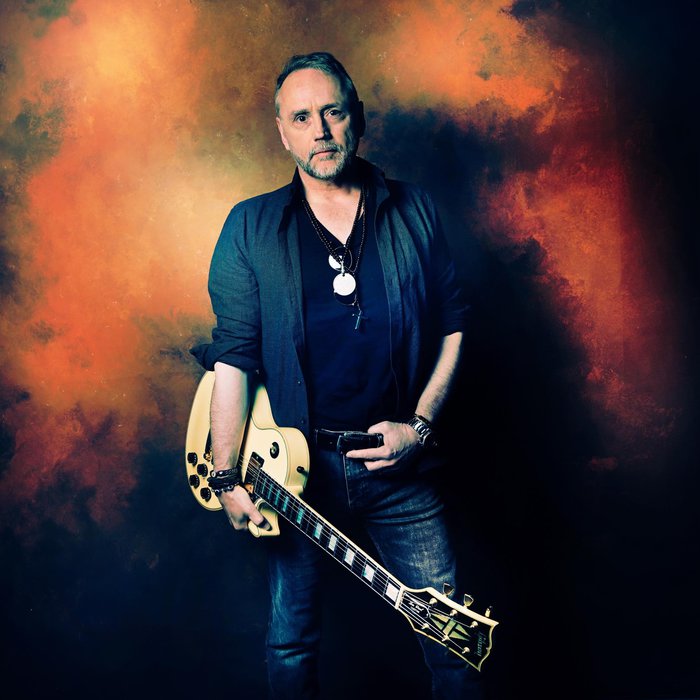
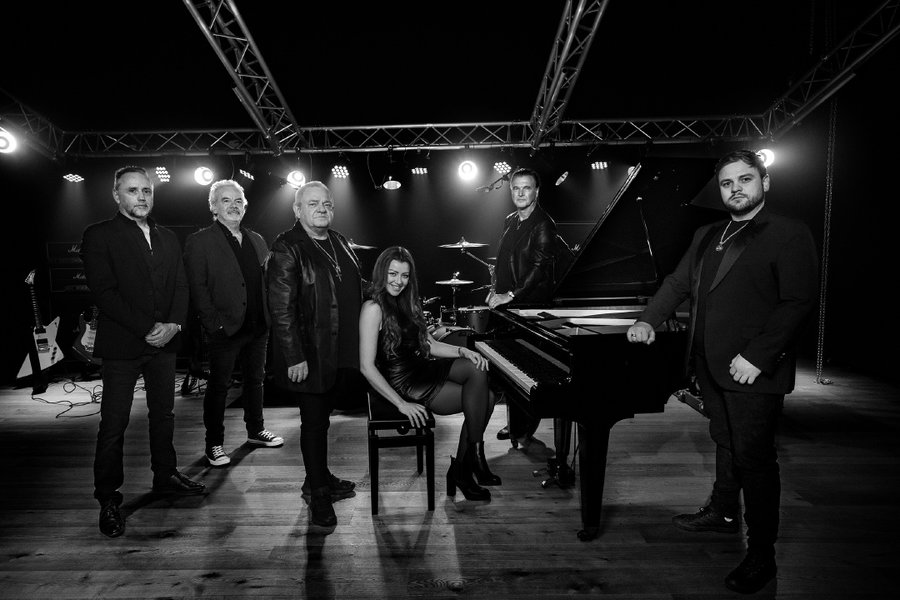
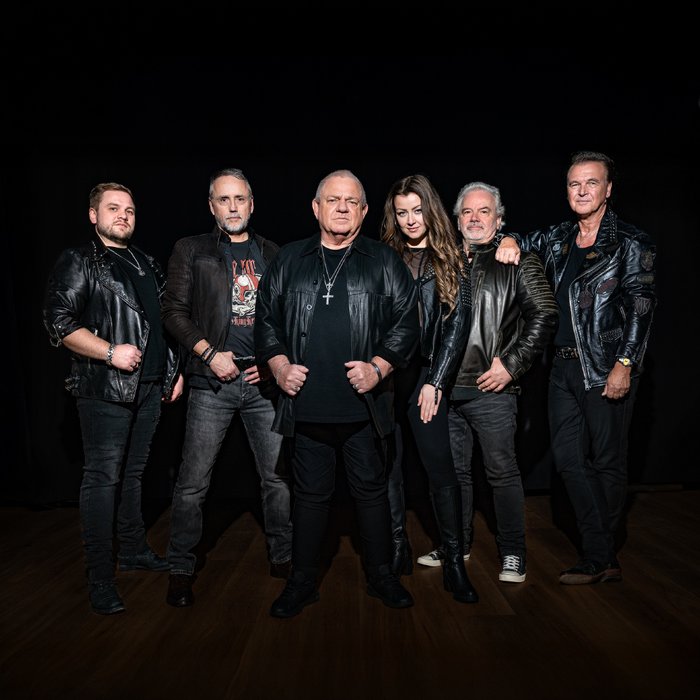
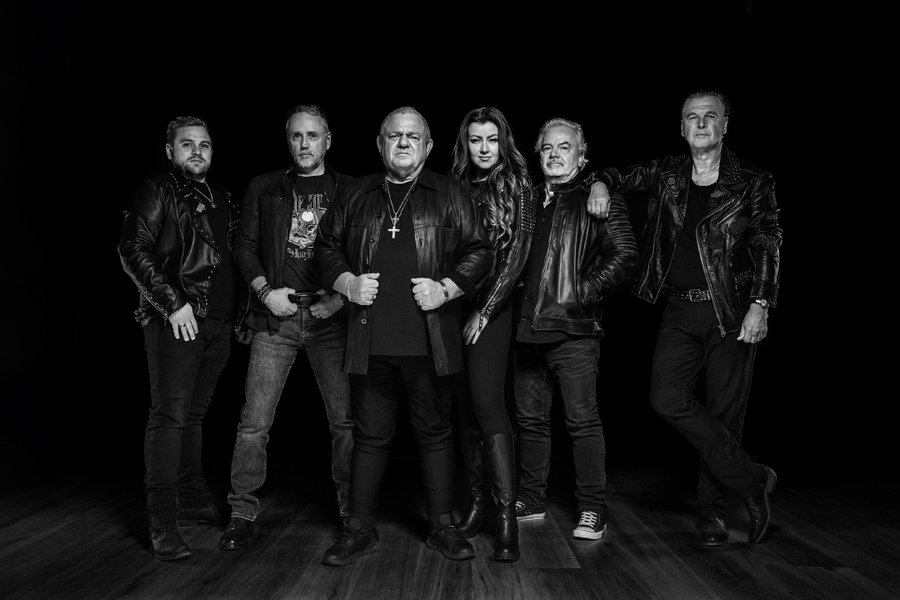
The project Dirkschneider and the Old Gang (abbreviated DATOG) emerged during the COVID period (remember that?) and was originally conceived as a one-off charity project. At the time, it seemed that everything would be limited to just one EP. However, a few years later the team eventually recorded a full-length album. “Babylon” demonstrates that the saying about old dogs and new tricks isn’t entirely fair. Of course, the (relatively) new DATOG release sounds quite traditional for Udo, but it also contains quite a few interesting and unusual nuances. We spoke with guitarist Matthias “Don” Dieth about how “Babylon” was created. The interview took place on the eve of the New Year, but for a number of reasons it is only being published now.
|

- Hello Matthias! Nice to hear from you! I heard that you were ill last week. Are you feeling better?
Yes. Thank you very much. Indeed, I had a problem with the stomach and I had to lay in bed for about eight days strictly. But now I'm nearly fully recovered and I already can eat anything. Sometimes you just have to be a bit careful, but nothing serious and it's all fine. So thanks for your patience and thanks for rescheduling the interview.
- You're still doing a promo campaign for the album “Babylon”. Is the feedback still positive or did you face some negative reviews?
Well, to be honest, I read some of the reviews. I asked Artificial Intelligence to give me some results reviewing the “Babylon” album. And to my knowledge, most of the reviews are good. It seems that people and journalists like the album and especially the chemistry between the three singers and with our lovely Manuela. There are some reviews that are not quite that positive. I think it was one who said, what does this project mean? What sense does it make to have Udo with a female singer? It's not heavy enough. It's not hard enough. It's not fast enough. Well, you’ve got to handle this. And others say, oh, it's an average thing here and there. Well, it is impossible to please everybody. I think that most of the reactions are good. And many people, listeners, fans and journalists also seem to be surprised about the musical variety and the quality that we have been able to deliver here.
- Actually, you, Udo, Peter, and Stefan always have delivered good quality. So it's strange to hear that someone is still surprised with that.
Well, you always have some haters, don't you? If you are into death metal or thrash metal and all this stuff, then I can imagine that you have problems with the music like this, which is not in parts like true metal. There are things like female voice, which is not growling, which is singing. There are ballads, you know, and when you're into Kreator, maybe you hate ballads. I can understand this. So maybe some people expected faster, heavier stuff because of the trademark Udo Dirkschneider, you know, and maybe they don't quite understand that this project is something different. And especially Peter, Stefan and I, we are a generation coming from the old hard rock days. You know, I was musically socialized by bands like The Sweet, by Richie Blackmore's Rainbow, Deep Purple and things like that. That was basically the hardest music you could get in those days, and these influences made us the people and the musicians that we are. And some of these songs like “Propaganda” on that album, it reminds me of the old Rainbow days.That's why I chose to play the Stratocaster on that song, because this is a bit of a homage to Richie Blackmore, who was my hero in the 70s and in the early 80s. And maybe some people don't quite get this idea that we're just doing what we like. With this album we didn’t follow any demands being the hardest, the fastest and things like that. And Manuela is just such a versatile singer. She brings melodies and harmonies as a composer. She's a composer who comes from a different point of view. And, you know, she was born in Kazakhstan, so she has some Eastern soul in her, which is also a guarantee for solely music that comes from the heart, you know, and maybe this is what some people can or don't want to understand. But as I said before, the vast majority of the reactions are good, if not very, very good. So I'm very happy with this result.
- I have some specific questions about the album. I know that some of the songs that ended up on “Babylon” were written by you for Tiffany Kills or Gravestone. So why did you decide to bring them to Udo? And which songs were that?
Maybe I have to correct you a little bit. There were no finished songs proposed to be songs for Tiffany Kills or Gravestone. I had some ideas. You know, I have a normal job and I don't have the time to concentrate 100 percent on music, which I would love to, but I can't. And so I always collect ideas when I have time, I do some pre-productions, I do some recordings of ideas and they're not quite finished all the time. So one of these ideas was the title track “Babylon”. And I thought initially that this could be something for Tiffany Kills. But we weren't able to finish this song properly. We knew that this song needed another influence. Manuela was the right person to give this song the next step. And this is a perfect example for a wonderful collaboration. I took this song away from Tiffany Kills and brought it to Stefan. He said, “We have to do this. We’ll give it to Manuela and will find out how we go on with it, with the structure of the song”. I'm very, very happy with this result. And this is one of my favorite songs on the album, not because the original idea comes from me, just because I love what the others, especially Manuela, contributed to this one. And I had some other hard riffs and things like that, which were basically an idea to make some recordings with Gravestone, which we haven't done yet due to tight schedules. So I went through these ideas with Stefan Kaufmann and we decided they were not really suitable for this album. So maybe we’ll do it with Gravestone. We don't know. You always have a bucket of ideas and look for what project and which idea would suit. I mean, I'm in a good situation having several projects now where my ideas could be formed into songs, you know.
- The song “Dead Man's Hand" has a very interesting pre-chorus with a kind of funky rhythm when you play this wah-wah type of guitar. So who came up with this idea? It's quite unusual, not only for Udo, but for hard rock or heavy metal in general.
I call this part the ABBA part, you know, because we all love the band ABBA from Sweden and Manuela kind of sings like they did. This part was not my idea. I think it was Manuela's idea and it was Stefan's idea to do it like this with these funky, heavy guitars with the wah-wah. And it was presented to me basically in the very beginning. And in the first place, I said to Stefan, “What is this? Are you serious about this?” And he said, “Of course we do this”. And so we played the guitar with the wah-wah and it's unusual, but I think it worked out great and I love it. I love it when things are a bit different. You have so many hard rock bands and heavy metal bands, old bands like that have been in the business for years or even decades and you listen to their new recordings and they're not always a pleasure. You know what I mean? It's always like I think they're doing the same thing over and over again. And I have the impression that we succeeded with not doing this on this album. So it's fresh, although we are old and it has some musical elements which we normally don't use and which definitely Udo doesn't use for his U.D.O. or Dirkschneider projects.
- I have read in one interview that in the beginning of the project, you had doubts about your solos, that they are good enough for this project. So why was that? To me, you are an acclaimed guitar player and your solos were trademarks of the early U.D.O. albums.
Thank you very much for saying that. You know, I always think that maybe things are not good enough. In a way, I'm a bit of a perfectionist, and I did not play guitar for 20 years after I quit U.D.O. in 1991. I quit music totally and I basically didn't play for 20 years. And when Stefan called me in 2020 or 21 during the Corona pandemic, he told me about the project and said, “We would like to have you as an Old Gang member to do guitars and solos”. And at that time, it was not that long ago that I restarted playing. And I really thought. “See all these young guitar players, what the hell are they doing? They're all these laptop players. They do tapping techniques and things like that”. And I thought I couldn't do this. I'm an old guy and I play my style, but I had to realize that I still get better. You know, U.D.O. has these good guitar players. They had Andrei Smirnov, who is a fantastic player. They have a new guy now who is fantastic. Fabian Dee Dammers is a great player. They're all a different generation. And I was really afraid that it wouldn't be good enough or that it wouldn't fit because of my old style of playing. But it turned out that they loved it. And so I'm happy with this. Can you understand that?
- Yes. I have a lot of doubts about what I do and what I have achieved. So I understand.
Yes, we have some chubby notes in the solos. You know, they're not perfect on this album. There are great ones. There are good ones. There are ones that anytime when I listen to them, I think I should have done this again, could have done that one better. In the end, we left some mistakes or some floppy playing. We left it there because the whole feel of the solo appeared to be a good one. And I was not sure if I could redo that.
- Since you are a big fan of Blackmore, you may know that his solo in the song called “Burn” has some sloppy notes and he wanted to re-record it. But the other said, “No, no, leave it like this. It's perfect. Even with mistakes”.
Yeah, it's basically the same here with some stuff. Yeah, sometimes the whole idea is better than some bits and pieces that are maybe not perfect. But what is perfect? If it transports or transmits a feeling and people listen to it or can listen to it and they get touched in any way by the things you play, you have reached your goal. It's that you cannot demand more.
- As far as I understand, you had to play the demos of the songs to your label. So did they try to change anything or did they just want to supervise the quality of the songs or something like this?
Who told you that they wanted to hear demos?
- Nobody told me, but I've probably read it in one interview with Stefan.
I don't think they had demos, but what happened is the label chief was invited to Stefan’s place when the production was not finished, but very, very, very far. And Stefan played him all the twelve songs. And that was before the contract was signed. If I remember that one right. And he heard the songs in their not finished versions. And he said, it's perfect. He even said, “What do you mean it's not finished? It sounds finished to me”. So we didn't have to present demos and he didn't want to have changes or things like that. They took it like it was. Which is perfect.
- Ok, I see. So the album was recorded in Dierks Studios where a lot of classic rock and metal albums were done. So why did you decide to do it there today when everyone has their own home studios? Or why didn’t you use the studio where Stefan Kaufmann works?
Well, we didn't do the whole album at Dierks studios. There were parts of the album we did there. Some vocals. I did some guitar work in my little home studio. And I did some of the solos with Stefan at Dierks Studios and with Stefan in his own Roxx Studio. So we went here and there. It was always depending on when the people had time. It was very rare that we were all together at the same time. And that's why it took so long, you know, but we didn't have a time schedule. We didn't have a limit. So that was quite comfortable just to play whenever everybody finds the time. But to record the videos and do the final work and some work in between at Dierks Studios was to me a great experience because we did the first four U.D.O. albums there. I did a Sinner album there and it was a bit like coming home. Dieter Dierks is one of the greatest producers of all time to me. And being there, recording there and having the spirit of the 80s in the back was a great experience.
- Did you only write songs and record guitars for the album or were you involved in such processes like mixing, mastering, vocal recording? Or did you supervise the deal with the label as you are a lawyer now?
Good question. Production wise, I was not involved in the mastering process or in the mixing process. What we did was Stefan did the first mixes and he sent them to me and to the other guys. We shared our opinions and had some suggestions like maybe Udo could have a bit of a delay on this point or Manuela could be louder or quieter on that part and things like that. But that was only little bits and pieces. And the last part of your question is absolutely correct. As a lawyer, I supervised the contract that we made with the record company and I did some very hard negotiations. But now everybody is happy. And as Udo said, it's good to have a lawyer in the band. And you must have a really strong personality to lead negotiations and to get what you want.
- So is it natural for you to be a hard person or did you learn to be like that during your lawyer career?
That's an interesting question. I don't know if I'm a hard person. I'm just trying to be professional in whatever I do. When I'm a guitar player, I try to be a professional guitar player and I try to be prepared and I try to learn the songs and the parts that I have to play and to be as professional and smooth as possible. And the same is with a lawyer. When you're a lawyer and your duty is to negotiate the contract or to have a file at court, it's your task to find the best solution for your client because you get paid for this. And sometimes you have to be a tough guy and sometimes you have to see and to keep in mind the results and the possibilities. It's not funny to strive for something that is impossible to gain. So some skills as a lawyer are good when you are able to, even if you're hard or tough in the topic, to be able to communicate with the people and with your opponents and to search for good solutions for everybody. You can not only go like a ram, you know, and say, this is my client and we only do this. So just a happy client is a happy lawyer. That's the best sentence for this. And, you know, with DATOG it was not that hard because the record company understood what they would get. They heard the stuff and loved it. The label boss was honest saying, “I want this” because we said we could offer this to other record companies and said, “No, I want this”. And we had some negotiations about financial terms and things like that.
- OK. If you don't mind, I have some questions about your past career with U.D.O. and some other bands. The album “Animal House”. It was basically written by Accept. Did you have any influence on those songs? And how was it to record the album with Peter Szigeti?
This was basically my first professional appearance in a big, big recording studio. And we had. When was that? Eighty seven, I guess we had tapes, cassettes, music cassettes and with the demos played by the Accept guys. And it was clear that these are the songs that are to be recorded. I came to the studio when they already did bass and drums. So they were already finished with those. And then I came. A bit later and the songs were basically clear and we had some space to change some things. For example, you know that song, “They Want War”. There is a guitar solo and right before the guitar solo, there is a kind of acoustic guitar sounding arpeggio thing. Maybe this, for example, is a part that was not on the original composition and not on the demos. This is a part that I came up with because I had the idea there must be something before the guitar solo. And there's some idea that is about war, soldiers and things like that, that gives maybe a bit of a feeling like marching people, but not very hard, in a soft way. So that was the idea behind that. And it turned out great. And the Accept guys loved it when they heard it. There were no guitar solos that we had to play. So we were free to do whatever we would like to. So the guitar solos that Peter and I did were completely on our own. So there was nothing like “Play this like Wolf” or something like that. Working with Peter Szigetti was good. He's a good guy and a great guitar player, too. He has his own style. I remember he had this Dunlop Cry Baby wah-wahh pedal and he always wanted this on in a certain position during his solos, which I thought is quite strange, but it sounded good for him. And well, how long is this? Forty years ago, nearly, isn't it? But I remember it being a tough piece of work because there were some songs that were really fast and which was a technical challenge for me. And I didn't have proper guitars then. I had my cheap Hunter and I had an Ibanez Flying V. And being the new member of Udo Dirkschneider's band put me for the first time put me in the position to receive an endorsement with a guitar company and I went to ESP in Dusseldorf and they said, “Okay you're the new guitar player of Udo Dirkschneider so we can give you a guitar”. So they gave me ESP M1 and did some changes to it and I got another one and so that was the first time for me to gain a bit better professional equipment.
- Peter came from Warlock which was already an established band at that time and he had more experience. He was kind of a boss in Warlock, so didn't he try to boss around in U.D.O. or maybe argue with Udo about certain things?
I can't remember things like that. When we did the recordings Peter I and Frank Rittel lived in a hotel next to the studio. We stayed there in two rooms and played together in the evenings and we had a good time together. There was no bossy thing, nothing bad to say about Peter. I can't remember him arguing with Udo. In the end when Udo said these two guys are no longer in the band I did not really understand why because I cannot remember that there was any fight or disagreement or anything. Maybe they had them without me, but not to my knowledge.
- Now let’s get back to your very first semi-professional band Dust. So what kind of memories do you have about that time and what kind of music did you play with Dust?
You cannot say that Dust was a semi-professional band. Dust was my first band as a kid, as a pupil. When we formed this band I was about 13-14 years old. We had this band with a classmate of mine. We covered some songs from Neil Young, we played some songs of UFO. I sang “Belladonna”. We played all kinds of songs, “h boy” from Mud and others. I think even one song from Bay City Rollers. This was the first time when we tried to write our own songs. I remember one song called “Music Doctor” that was the first song I wrote with the band and it was like a very easy riff and things like that. You know young guys trying to be musicians. But it was a great time and it was the beginning of playing guitars, dealing with music, with other musicians, having a band and I would not trade that. But you cannot say this was a professional band. We had a good singer then. His name was Uli Günther and he came from a bigger city called Ulm. We had some shows and concerts that we played together with other bands in the area around Ulm in the south of Germany. We had some 200-300 people going to our concerts. But we did not make any records or anything like that. I'm still friends with some of the guys from Dust.
- Was it then when you earned your nickname Don?
No. I got my nickname during the recordings of “Coming Out Fighting” with Sinner that we also did in the Dierks Studios. I remember one night we were in a pub next to the studio having some beers and talking about Dokken. And Mat said “Don Dokken from Dokken and you are Don Deith from Dieth” It was just stupid and then they all said “Don Deith! Yeah, that's great!” And since then this was my nickname. I think we put it on the album “Coming Out Fighting”, too. I can't remember but I think so.
- I also would like to ask you about your possible stint with Accept. Is it correct that after the tour in support of “Timebomb” you were unofficially asked to join Accept as a second guitarist together with Wolf Hoffman?
If I remember well Stefan and Udo had the idea of me joining them to reform Accept but I know that Wolf and Gabi were not into this idea. So I never had an official offer. And if I had I would have said no because at that time I was fed up with all this music stuff and I was fed up with Accept always being the big shadow, you know. We could do whatever we wanted with U.D.O. in those times and someone always came around the corner and said, “Yeah, you're brothers to Accept”. I was fed up with this. On the other hand I had already started my legal studies which I loved and I didn't want to give that up. The second and maybe the most important part was that I could not imagine being a second guitar player next to Wolf Hoffman and I think he didn't want that either. I mean I get along with Wolf well, we respect each other and I could talk to him and it's all fine, but I don't think it would have been good to be in the same band. So this question really was not to be decided and I'm very fine with this. I think if I did that and went to Accept as the second guitar player that probably wouldn't have lasted long.
- Thank you very much for the interesting and honest answers! If you want to add something to round up this interview and to wish something to Russian fans feel free to make it.
Okay I thank you for your interest and I'm glad that there are so many obviously there are many Russian fans loving Udo and appreciating the music that we do. I'm glad that people all over the world, especially in Russia and other countries of the former Soviet Union like our music and they obviously like Udo. I know that Udo has a strong relationship to Russia and they toured Russia a lot. I hope that all these things that go on in the world presently will lead to a good thing and peace on Earth. The big wish that I have is everybody shall enjoy their lives, be friendly and enjoy a good portion of hard rock music.
Freewind Rider
Thanks to Maxim Bylkin / Soyuz Music for managing this interview
20 мар 2026

просмотров: 4063
|
|
 |
|
 |
|
|



|
|
|
|
1997-2026 © Russian Darkside e-Zine. Если вы нашли на этой странице ошибку или есть комментарии и пожелания, то сообщите нам об этом

|
|




















Сообщений нет
Комментарии могут добавлять только зарегистрированные пользователи.
Вы можете зарегистрироваться на сайте или залогиниться через социальные сети (иконки вверху сайта).