 |
One Team, One Spirit
 |
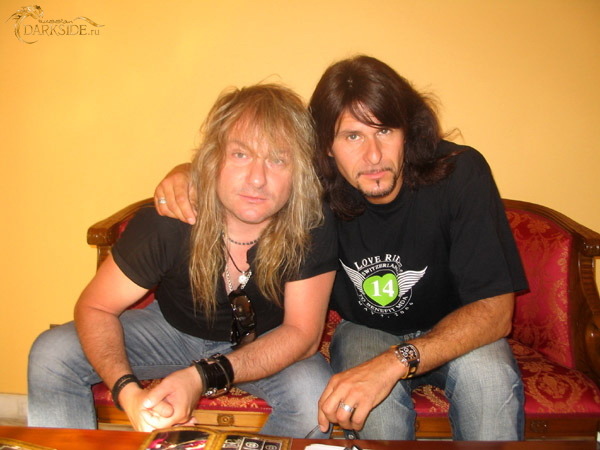
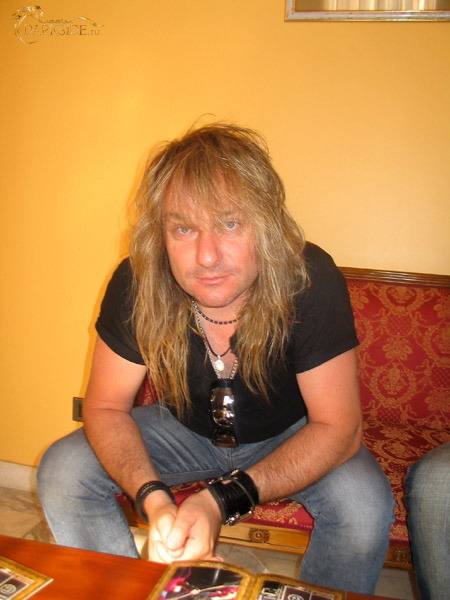
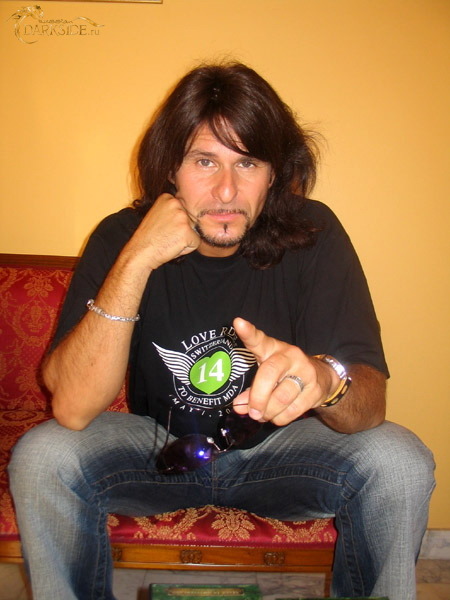
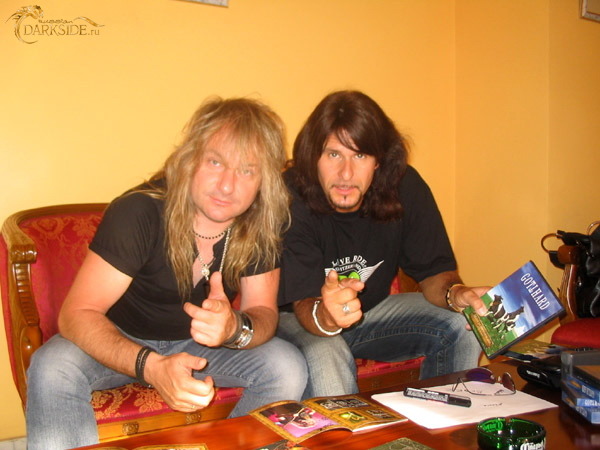
Only a few months after Swiss hard rock stars Gotthard played an excellent show in Moscow’s Club Tochka, we were surprised by the news that they’re coming back. This time it was for a different reason – these excellent upbeat rockers were invited to appear on the Russian TV show Star Factory and play a song with one of the “fabricants”, as they are called in this country. This surprising move stirred a very mixed response in the rock community, but we decided not to engage in discussions and rather ask vocalist Steve Lee and guitarist Leo Leoni what they think about the situation. And of course, we couldn’t pass by such topics as the band’s latest CD/DVD “Made In Switzerland”, Russian experiences, inspiration for lyric-writing and many other things. As usual, the conversation lasted for a long time, but that can hardly be avoidable when you talk to such nice and interesting people…
|

It’s now your third visit to Russia. What do you like most of all about this country? Is there anything that you don’t like?
Steve: It’s definitely too early to say what we don’t like. We sure like the first impact, it’s amazing – the city is big, it took us two hours to come from the airport, and there are so many nice and polite people.
Leo: I think it’s very impressive – there are 14 million people living in Moscow, and you’re not gonna find that in Switzerland every day. (everybody laughs) We don’t even have a town where 1.5 million people live, not even that, so Russia is very impressive. But also like Steve said, people are very polite and very concerned about making us feel comfortable, and that’s great.
Steve: I wish we could try a little bit more Russian food. We have had some caviar and fish, and they are great. And we also enjoy Russian coffee.
Leo: I think we gotta come the fourth time to have more of that!
The first time you played in the Kremlin, and the second time was in a club. What show did you like better? And was it easy for the Russian promoters to persuade you to play in a club after you performed in such a big and famous venue?
Steve: I don’t think it makes any difference if a place is big or small, if it’s a stadium or it’s a club. It all comes to one thing – rock’n’roll and fun onstage. No matter where you are on stage, it’s fun to be there. Of course, the first concert at the Kremlin was something very special for us, a great honor, but in the end it was the same thing – people were having a good time, and we too. Sometimes I like the club even better than bigger places because of the feeling – you are close to the people who are having a good time, and you feel the warmth.
Yeah, many musicians say it’s better to play in small clubs than in huge venues…
Steve: I wouldn’t say it’s better, it’s just different. Sometimes it’s warmer. Not only because you’re sweating like crazy (laughs), but because the public is closer.
Leo: There is a big difference, because in the Kremlin the people had to remain seated, and there was a lot of controls, I would say. The fans could not really go for the concert. And in the club everything was different, they could more or less do what they want, and they could really enjoy the show with their ears, soul and body. They could dance, which was not so easy to do in the Kremlin. So that was a very special event as well.
What do you do if you come onstage and feel that something is wrong – the audience is a bit lazy, you don’t hear yourselves onstage, or some of you are tired or sick? Do you have any tricks that can be done to improve such situations?
Steve: I wouldn’t talk about tricks. I would say that normally when you’re onstage, you do what you like most, that’s playing your music, and you gotta be professional enough if the sound is not what you expect. Sometimes it’s just what you hear onstage, but normally good people in the front are mixing the whole situation and doing a great job most of the time, I would say, every time. So we don’t really care what’s going on sound-wise in the front, that’s the issue of other people. But you gotta be professional enough to do what you like to do normally. And of course, you try to catch the people with every song, with every line, with every solo. Normally it’s something that comes naturally. There’s no trick, you don’t have to say something to make them smile, and I think it’s the best part of Gotthard, it comes from the heart. It’s not on a sheet of the things you gotta do, there’s no recipe.
Leo: We rely on the professional people around us. The only thing we can do is play and try to get the best out of it for the fans and for us.
What do you think about bootleggers? I know that your show in the Kremlin was taped, and a friend of mine has a copy of this bootleg…
Steve: Oh, can you please organize a copy for us, too? (everybody laughs)
But doesn't it make you uncomfortable in any way, or you just don’t care about it?
Steve: If we’re talking about pirate copies, in the countries like Russia it’s a good promotion for us. Of course, if you sell less records, it’s not funny, we’re not happy about that, but I think it’s a good way to promote the band and show what’s going on. I try to look at this side of the coin – it helps a lot.
Leo: There are two ways of approaching this problem – you can either go for it and try to have everything erased, but it’s hardly possible, or you can leave it as it is. Gotthard is a band that’s got nothing to hide, we are such a great band! (everybody laughs) I think we just have to live with it. Of course, hardcore fans will anyway buy the original record and the original video.
Steve: Anyway, these people come to our concerts, which you cannot copy.
Leo: This copy market has not destroyed the music market, it’s the Internet that destroyed the music market. These are just a few copies that are gonna be sold between fans, they are not gonna hit the big market. Like Steve said, it’s a great promotion at the end of the day.
This time you’re coming to Russia especially to perform a song together with Roma Arkhipov, a participant in the TV reality show “Star Factory 5”. How was such an unusual alliance created? When and how did you meet Roma?
Steve: That was a funny thing. Nobody expected one of the candidates of this “Star Factory” to appear onstage with us, but as far as I know, he was always a big fan of Gotthard, he liked the song “Heaven” especially, so he wanted to perform this song during the television show. So we were contacted, and they asked us if we wanted to do that. Of course we wanted to do that together with the shows that we intended to play there. So we met him one hour before the show (it was aired on March 31, 2006 – ed.), we were there trying things and rehearsing, and very soon we were singing this song together. That was a very nice experience for us, too, it’s something different. We are not into this format of star search, “Star Factory” or whatever, we earned our fame the other way round – we were playing every day in our rehearsal room. At that time shows of this kind were not happening in Switzerland. But I think it’s something nice to do. it’s something that gives you more points of view, you try something different, and it’s always good. It changes what you’re doing normally a little bit. And it’s a big chance to be well-known for a broad audience, the people watching the TV show.
Leo: And it’s also very good to help somebody who’s trying to do rock’n’roll nowadays. Roma is very rock-oriented, so maybe we can give him a hand, help him be welcome in the rock’n’roll world.
Indeed, the TV show in which you’re taking part together with Roma has a huge audience, but I know that a lot of rock and hard rock fans don’t like it and don’t watch it because it usually plays only pop music. Does your participation in this show mean that you’re trying to cover a broader audience, not only hard rock fans who know you anyway, but also the people who are just regular radio listeners or TV viewers?
Leo: First of all, I would say that it would be great if music did not have borders. We live in this world to communicate with each other, and if you communicate with music, that’s a good thing for peace in the world. Whatever audience you have, there are always human beings in front of the stage and human beings in front of the TV set – and that’s all about it. No matter whether they are black or white, Russian or Australian, the main goal is to communicate. At the end of the day, what we do is try to express ourselves with our music and our lyrics. But if there’s a way to get a wider audience, a different audience, kids or adults, that’s very important. And I do believe that some rock fans know this program, too.
Steve: A band like us is very proud to have a wide audience, especially in Switzerland. If you get a chance to see Gotthard in Switzerland, you will see that there are seven-year-old kids at the show, and there are 70-year-old people as well. It’s not just for one target group of people, music should be for everyone. Of course, one kind of people like ballads more, the other kind of people like the heavy stuff more, but there’s room for everyone, and there’s something for everyone. Maybe it’s gonna happen here as well. We’re a rock band, but it doesn’t mean that you gotta be between 17 and 18 to listen to this music.
Leo: I like to listen to Madonna too, so what’s wrong with that? (everybody laughs)
Unfortunately in Russia the gap between rock and pop fans is very deep, and these two crowds usually don’t mix. Is the situation really that different in Switzerland and in Europe in general?
Steve: I don’t know exactly if the gap is very deep. Probably in a place like Russia it’s more restricted somehow. But I think in the end we’re all consuming what we get somehow, and if you listen to the radio in Switzerland, it’s quite mixed, there’s a bit of everything.
Leo: It’s very important where you draw the line between rock and pop. If you say that Manowar is rock and Madonna is pop, then probably the gap is very big. But think what Sting is all about, what The Beatles is all about, what The Rolling Stones is all about, what Pink Floyd is all about, the gap is getting smaller and smaller. I think Gotthard is one of the bands that are trying to fill the gap. And that’s the reason why we have all kinds of people in the audience. What matters is not the style, it’s the quality, the vibe you give to the people.
I know that in European countries there are TV shows that are very similar to Russia’s “Star Factory” in which Roma is taking part. Do you ever watch TV shows of that kind? Do you think it’s a good way of finding and promoting new talents?
Steve: This is a question I’ve answered many times. But I’ve got my point of view, and I think that, of course, it’s a great chance for young talented people to show what they’re able to do. On the other hand, sometimes I’m a little disappointed, because I see that it’s business at the end of the day. It’s a chance for record companies to smash somebody without experience in front of a wide audience, sometimes they do recordings and they just burn out. I think it’s very important for an artist to start low and go higher and higher in order to achieve experience and get better. That’s what we did actually, it took us quite a long time to form the first band, while these guys are really pushed in front of a big wide audience, and that’s very dangerous. But I’m not saying that it’s negative for all of them. Some of them will really come out of this big mass of people trying to be someone, to become a star. That may be a good start, but hard work will be necessary after that.
Leo: None of the ways you may choose to enter the music business or any kind of business guarantees that you will reach the point. What matters is what you’re gonna do in the future. Those guys will be through with that TV show one day or they will leave by themselves, and they will have to make records, to promote themselves, to find a good manager, to create great music, after all, and they will have to be able to keep going. And that’s where the difficulties start. At the TV show everything is packed, everybody is helping each other somehow, that’s the format, and the difficulties they have now cannot even be compared to what they will have in real life. Real life is not a TV show, and nobody’s gonna have you around unless you are able to prove something. The TV show is supposed to be the first lesson, what they will learn at the second lesson is up to them.
Speaking about promotion – it’s been one and a half years since you signed to Nuclear Blast Records. Are you satisfied with cooperation with this label? In which ways are they better than BMG?
Steve: We always stated that being at a major label is bingo, that’s where everything is gonna work fine, there’s money around. In certain countries it was very good, but in certain countries we just had no chance at all. There was no help, we were just a number somewhere on a desk. I think Nuclear Blast is doing a great job, especially in those countries where we never had a chance to play. A lot of doors opened – we are going to South America, we went to Sweden, we went to Spain and Portugal, the countries that we had never played. In terms of that, it was a great achievement for us, we are very happy to work with those people. But there’s always something you gotta talk about to make it better, it is different from country to country. Of course, Nuclear Blast is well-known for heavier music than we are, but I think it’s important for them, too, to increase the market and try different things. It’s something that’s good for both parts.
Leo: People saw a very big difference in the situations at major and smaller labels. A major is good, if you are living in a big country like America, because there they have the pressure. Gotthard comes from a small country, so for political, internal and practical reasons the record companies have no power to handle the rest of the world. There’s no increase in your sales in bigger countries, because Switzerland cannot put any pressure on the American market, while vice versa, America can put a lot of pressure on this little Swiss territory.
In Switzerland you have your own label, G. Records. Is it easy for you to combine music and business? A lot of people believe that musicians and businessmen are actually on the opposite sides of the frontline – is that indeed the case, in your opinion?
Steve: Actually it’s very difficult trying to be both. It’s more work, of course, but on the other hand, it gives you a lot of control over what you do, over your product. You can decide when the right moment has come to do certain things. I would say it was a very important step for us to do that.
Leo: And we look good in suits! (everybody cracks)
Do you plan to sign any other artists to your label? How about releasing Roma’s music there?
Steve: Maybe in the future, you never know. We like to promote other things as well, but at the moment there’s too much work to do with Gotthard. We’ve got more things in mind than we have done so far and more targets.
Leo: We prefer to experiment on ourselves, on our own skin rather than on somebody else’s skin. (everybody laughs)
Steve: That’s right, I think it’s more fair.
Your latest release so far is “Made In Switzerland” CD and DVD. First of all, who came up with such a great idea for its cover? And what meaning did you put in it?
Leo: It’s very simple – the cover shows what our Swiss style of life is. (laughs) The back cow cannot really walk, and that’s the reason why the front cow tries to help it, bring it home.
Steve: It’s a rock’n’roll cow couple. They are having a great time in the Alps. (laughs) We wanted to do a funny cover that shows the Swiss style of life. We didn’t want to have just a picture of the live concert. It’s something you can laugh about, a lot of people think it’s funny, and I think that’s what rock’n’roll is about. Don’t take yourself too serious!
It’s impossible to take this cover seriously! (laughs)
Steve: That’s what we wanted!
Leo: Most of the time you see cows in a different situation, you never see a cow like that, right? (laughs) It wasn’t easy to find cows dancing, it wasn’t easy to find cows having a good time with each other. (everybody laughs)
What was the reason for releasing the same recording on both CD and DVD? A lot of people are telling me that live CDs are no longer popular in Europe, because everybody wants to see the band playing…
Steve: The idea was to make a live CD only. But then we talked about it, we thought, “Let’s maybe do a little video together with it, maybe a few tracks as a bonus CD.” But in the end everything was so great, we loved the cameras and the shots that were done that night, and we wanted to have a live CD and a live DVD as a bonus. To me it turned out that the DVD is much more important than the live recording. And there are more songs on it. But still it’s a bonus. If you like the audio, you’ve got it, if you like the DVD, you’ve got both of them.
Leo: In fact, the DVD is a complete concert, and the CD is cut out of the show. That’s for technical reasons, too, but at the end of the day there’s piracy that we have to fight, and that’s a good way to make the fan feel when he’s buying this product that it’s something the band gave him for free somehow, that not everything is done to make money.
Steve: There’s another good part. If you’ve got a car with a CD player, you can put the audio on, and if you’ve got the DVD plane at home, you can put the other one on, so you’ve got Gotthard at both sides. (laughs)
You already had a DVD in the past, it is called “More Than Live” (2002). What are the differences in the recording processes of these two releases? And which one do you like better?
Leo: I think there are two main differences. The first one is the budget situation, which was not that favorable back then, and the second is that at that time we had a management that pretended to be more of a star than the band. (laughs) If you watch “More Than Live”, you will see more managers talking about things, not the band performing live. That was kind of a weird situation. And as we were asked for a long time for a live record, we thought 2006 was the best moment to bring it out on the market. The main difference is that now we decided what to do and when to do it.
Steve: “More Than Live” was not the band’s idea somehow. It was just the idea somebody had to give the fans something special. We never did an official live electric recording. We did “dFrosted” (1997), but it was acoustic. So after 14 years of the band, it seems the right time to bring out a live electric album. The Lipservice Tour was so successful, a great show every night, so we wanted to record it and keep it for ourselves and give it to the people. And it gives us the time to go on with the tour, we will go on until late October this year, and it gives us time to wait until the next studio album as well. Sometimes if you wait two or three years between studio albums, it’s quite a long time, and you may be forgotten in your own country when you’re traveling and playing abroad.
How often do you personally watch DVDs by other artists? Do you have any favorite music DVDs? And what about TV – do you enjoy watching it?
Steve: We like to see other bands performing, we like to go to concerts. Regarding DVDs, everyone in the band has his own favorites, there’s a lot of great live recordings these days. I like the Journey DVD absolutely, and I’m anticipating the new DVD by Whitesnake. We had a chance to see them at a few festivals during the last tour, and they did a live recording as well. It’s nice to compare us and other bands, and I think we’re doing a great job as compared to most bands. I’m proud! (laughs)
I like the video for your song “Lift U Up” very much. Where did you shoot it? Who are all these people that appear in the video?
Steve: First of all, I gotta say that it was damn cold there! (laughs) The shooting lasted for about 17 hours, it was in Romania, and all these people were found by the video company. They were there for just that one day, they were freezing their asses off, just as we did. (laughs) Shooting a video is a hard job, especially when it’s cold and you gotta stay outside with just a few pauses. But we had a great time working together. The shooting took place in Romania, because it was cheaper to do, and we’re not exactly well-known for videos, we like to perform live. But nowadays you need the videos as well.
At your latest gig in Moscow “Lift U Up” was one of the songs that got the warmest welcome from the audience. But do you know at once that a song you have just written is going to become a hit, or do you just put an album together without thinking about the commercial side of it?
Leo: I think that when we write, we write. Only when you have something on tape and you can hear what you’re doing, you get the feeling that this could be a hit or not. As to “Lift U Up”, from the moment we heard the demo tape, everybody agreed that everything was right there, and everybody had the impression that this is it. In fact, the demo version and the final version are not really different, just a few words and a few sounds changed.
Steve: I think you cannot start writing when you say or pretend that it’s gonna be a hit. You just write and do what you feel, what comes from the heart. After all, I don’t think you need a record with only hits. First of all, it’s almost impossible – it’s nice to have different colors, and certain sounds are great sounds, but you know it’s never gonna be a hit because it’s quite complicated for the masses. But it’s good to have certain sounds which are quite simple for people to understand. If you have this typical groove sound that everybody can listen to and move their feet along, it helps a lot. “Lift U Up” is quite different from the rest of the record, but you hear it’s still Gotthard. (laughs)
The two of you are the main songwriters in Gotthard. Can you describe the way you work on new material?
Steve: It’s a very natural thing. Most of the time Leo comes up with riffs and ideas for songs, sometimes there are little things to do for me, because he comes up with a lot of ideas. And sometimes I come up with ideas, too. It’s not that we have a monopoly, we just come up with most of the ideas, but everybody in the band is welcome to offer his own ideas. We work together, we jam together, there’s no recipe to write songs, it’s just a very natural process.
Leo: We collect ideas when we’re traveling or whatever, we write during the day and in the night on tour, and when we’re home, we start to check out bits and pieces and think, “Oh, this one is good, we can work on it!”
Steve: Ideas are everywhere, you just gotta try to capture things. Sometimes you read a paper, you see a movie or talk to somebody and suddenly the ideas are there to write a few lyrics. Or suddenly you get a melody when you walk through… the Red Square, you never know! (laughs)
Do you write about your personal life, or is it mostly your imagination?
Steve: I would say it’s both. It would be boring if I just sang about my life or my ideas or my hobbies or whatever. I think it’s very important to be open. Sometimes it’s just imagination, sometimes it’s stories or things that happened to us. That’s a good point, you’re free to do what you like, and that’s good. On the other side, I must say that I don’t always want to write about problems, I wanna write about positive things most of the time. That’s one of the things which I don’t like in most of the new bands – they are only writing about bad things – the world is gonna be destroyed, everything is dark and everything is bad. I think rock’n’roll is basically having a good time, and if we can bring a little bit of positive vibes to this world, it’s a little step to a better world as well. We’re trying to entertain people and make them have fun.
Leo: The line that sums up what Steve said is in “Lift U Up” – “All I wanna do is put a smile back there on your face”.
One of my favorite Gotthard songs is “One Life One Soul”. Is there any story behind this song? Is there a real person to whom you dedicate these words?
Steve: It’s dedicated to all the people who sometimes have little problems, and they wanna see the world from another side, hold on to something they love or like. It’s actually for everybody, I didn’t write the lyrics having somebody special in mind.
Another song with very interesting lyrics is “Anytime Anywhere”. What is this song about?
Steve: The song is about people having too much power, having a chance to decide important things in the world, such as starting a war. The message is: be careful, because we know what you’re trying to do, we’re gonna watch everything that you do. It’s just a chance to show that we’re also interested in what’s going on in the world.
Leo: I think it’s not only about politicians, there is the same situation everywhere. There is always somebody with too much power in office doing things you may don’t like. Stand up and make it different!
Gotthard have a close association with sports, you even wrote the song “One Team One Spirit” as an Olympic anthem for the Swiss team. But how much do you personally go in for sports? What are the sports that you enjoy to do and to watch the most?
Steve: One of the positive things in watching sports is that you’re not sweating. (laughs)
Leo: It depends on the game! (everybody laughs)
Steve: I think it’s very important to be healthy and try to be in shape in both body and mind. Otherwise, it would be difficult to hold on to a tour that goes on for more than a year, like it’s the case with us. I think everybody is more or less trying to stay in shape with sports. For example, Leo likes to play ice hockey, which is quite popular in Switzerland, and I like to go to the gym, do jogging, swimming or whatever that keeps me in shape. On the other hand, if you play a two-hour concert every night, it’s sport as well.
By the way, do you follow the developments at the World Football Championship in Germany? I’m told the whole Europe is crazy about it, and record labels even postpone album releases because everybody is too concentrated on football…
Steve: (laughs) Yeah, that’s true, there’s football fever in Europe!
Leo: It’s a virus. The Swiss team was there, too, and it’s interesting, so why not? It’s an event that is held once in every four years, and it’s something different from the normal routine life. Of course, the focus of Gotthard is our music, but it gives you a chance to switch your attention to something else for an hour or two.
Gotthard is like a team, too – the four core members have been together for 15 years without any replacements, you only change second guitarists and keyboard players sometimes. How do you manage to keep the unity of the band? What do you do to avoid quarrels and disagreements?
Leo: There are a lot of problems in the world. What matters is the way you approach them. Sometimes you think, “I wanna get rid of the problems, I wanna tear everything apart,” but that’s not the solution for a band. For us the priority is to have the band going. Whatever problems we have had, we always try to help each other, to make the band survive. Thanks to it we’ve been going for nearly 20 years, and that’s the most important thing. We did have problems like all the other bands have. The only thing that’s different with us is that we’re very lucky because we never touched drugs.
Steve: When you focus on the band, it’s very important to have a good time with each other, to maintain friendship and respect for each other, and that’s something you learn while growing together. I think that’s probably the recipe for success.
How much are you different onstage and in everyday life?
Leo: It’s you who decide what the difference is.
Steve: The world is our home, it’s all friends and good people. I don’t think there’s really a difference, it’s all the same. That’s one of the positive things in music – it has no borders, you’re open to everyone, and that’s great!
As far as I understand, Gotthard is now the only hard rock band from Switzerland that is popular internationally. What is wrong with other bands from Switzerland? Why can’t they become known outside your home country?
Leo: It’s just because we’re better than everybody else! (everybody cracks) And we’re nicer – not every band smiles like we do!!!
Steve: Some bands may be good, but they are singing in Swiss German, which is quite difficult to understand, especially in Russia or outside Switzerland in general. Another thing is they may be playing the kind of music that’s not very international, country pop or something like that. In addition, we’ve been around for many years, we’ve played in many countries, and we’ve always tried to go further.
Leo: For sure that’s what all the bands do, maybe a little bit more or a little bit less. But the market for many kinds of music is much more restricted in Europe and America than for the music that we’re doing. We’re trying to fill the gap, as we’ve told you before. But for sure, there’s a lot of music going on in Switzerland, especially on the internal market.
Steve: There are many bands in Switzerland, but many of them just play for two or three years, and then they split and start something new, so there’s no real chance for them to go out. They want everything fast, and one of the reasons for Gotthard’s success is that we grew slowly and always tried to get better with each record.
And now the obvious question about the future – when do you plan to start working on the next studio album? And what direction do you plan to follow in the future – will you continue in the vein of “Lipservice”, or will you change again?
Leo: It’s too early to say. For sure the cover will be different! (everybody laughs) But seriously, we have already started to collect ideas, we are working on new material. But after the release of “Lipservice” we were supposed to tour until December last year, and it’s now July this year, and we are still touring with that album! And we would like to play as much as we can with “Lipservice”, so right now we are only putting the ideas together, and when the album is gonna come out, how the album is gonna sound, and whatever it’s gonna be – it’s too early to say.
Steve: Actually the process of writing songs and putting songs together never stops. We’re always trying to come up with new ideas. But one good thing in Gotthard is that we are our own bosses. It’s us who decide when it’s gonna be out, and it’s gonna be out when all the songs are there and when they are recorded. I think somewhere during the next year the new album is gonna be ready.
Leo: And for sure it’s gonna sound like Gotthard!
Special thanks to Alexei “KIDd” Kuzovlev (Irond Records) for arranging this interview
Interview and photos by Ksenia “Wolfin” Khorina
Questions also composed by Roman “Maniac” Patrashov
June 29, 2006
22 авг 2006

просмотров: 4863
|
|

























Сообщений нет
Комментарии могут добавлять только зарегистрированные пользователи.
Вы можете зарегистрироваться на сайте или залогиниться через социальные сети (иконки вверху сайта).