
4 дек 2025 : Гитарист MESHUGGAH: «Мы упрямы и верны своему видению»
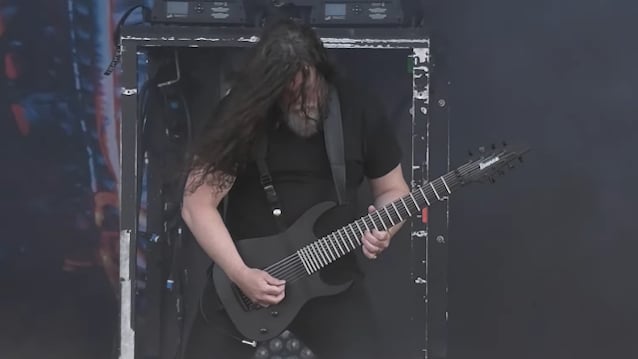
Mårten Hagström в недавнем интервью поговорил о том, как группе удалось продержаться на сцене столь долгий срок:
«Мы не молодеем, а только становимся старше. Мы существуем какое-то время, занимаемся этим довольно долгое время. Итак, время от времени, по крайней мере, в последние пару лет, мы размышляли о том, или, по крайней мере, я размышлял о том, какой была наша карьера.
Когда ты участвуешь в музыкальном проекте, и особенно когда мы все вместе и практически все делаем одно и то же с одними и теми же людьми в течение длительного времени, это реально полезное путешествие. Мы действительно благодарны за то положение, которое смогли достичь. Но я также считаю, что иногда бывает довольно сложно думать об этом, хотя, возможно, нам следовало бы это сделать. Это похоже на то, что ты настолько в центре событий, что иногда мы все еще видим себя в роли выскочки-чудаковатой группы, какой мы были в детстве, когда все косились на нас и спрашивали: "Что это вы, ребята, делаете?" Даже в жанре экстремального металла или любого другого прогрессивного жанра, это было что-то вроде: "Чувак, что ты задумал? Что происходит?" Как сказал мне однажды Tosin [Abasi, основатель и ведущий гитарист инструментальной прогрессив-металл-группы ANIMALS AS LEADERS], когда он впервые услышал нас, он сказал: "Эта музыка сломана".
Я думаю, то, что мы упрямы, остаемся верны своему видению и упорно занимаемся своим ремеслом, или как бы вы это ни называли, — это уникальное благословение, что мы можем это делать. Потому что ты можешь строить любые планы, какие захочешь, но жизнь бросает тебе вызов, и люди идут своими и разными путями, ты развиваешься в разных направлениях. Но даже несмотря на то, что мы по-прежнему остаемся музыкантами и отдельными личностями в группе, мы по-прежнему считаем это семейным делом и по-прежнему ставим во главу угла наше общее видение, поэтому то нам и удалось так долго продержаться. Плюс, конечно, некоторый умеренный успех помог нам, но мы совершенно искренне благодарны».
После того, как ведущий отметил, что успех MESHUGGAH был "заработан тяжелым трудом", Hagström неохотно согласился:
»Э-э, да, наверное. Трудно сравнивать себя с другими [музыкантами]. Часто, когда я общаюсь с другими музыкантами, они оказываются в самых разных условиях. Возможно, они были сессионными музыкантами, ходили в школу, играли в разных группах, но лично я познакомился с Tomas [Haake, барабанщиком MESHUGGAH] в детском саду. Нам было по шесть лет, а в 11-12 мы начали играть вместе. Jens [Kidman, вокалист MESHUGGAH] и Fredrik [Thordendal, гитарист MESHUGGAH] начали играть вместе в возрасте 13-14 лет. У нас с Tomas'ом была группа. Когда ушел барабанщик MESHUGGAH, двое других парней, с которыми мы играли вместе с Tomas'ом, пошли другим путем, они хотели заниматься другими жанрами, поэтому Tomas ушел в MESHUGGAH, а через полтора года я присоединился к MESHUGGAH. Так что больше мы ничего не знали. Я имею в виду, что я знаю других музыкантов, и вы можете видеть карьеру других, но застрять, так сказать, в этом пузыре, это было...… Я думаю, мы усердно трудились над своим ремеслом, но я не знаю, заработано ли это тяжелым трудом. Я думаю, мы все еще думаем: "Вау, неужели мы способны на это с помощью этого?" Сочинять такую музыку, выходить за рамки привычного и при этом делать карьеру. Потому что иногда это непросто. Мейнстрим всегда пытается вовлечь людей. И нам посчастливилось противостоять ему».
Говоря о том, на каком этапе творческого процесса сейчас находятся он и остальные участники MESHUGGAH, Mårten сказал:
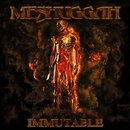
«Ну, в данный момент я действительно думаю, что нахожусь в фазе "выдоха". Поскольку мы занимались этим долгое время, мы отрабатывали этот цикл, и в конце тура в поддержку альбома [MESHUGGAH, 2022] "Immutable", я думаю, что я немного — не то чтобы в плохом смысле, но творчески истощен. И так происходит, потому что сначала ты пишешь материал и записываешь его, а потом выходишь и, общаешься с толпой, и, по сути, узнаешь, что ты на самом деле сделал. Это что-то вроде: "О, тогда я этого не понимал, но это такая песня". И "Я думал, что это будет хорошо звучать на концертах, но это не так, и очевидно, почему это не так, но это действительно хорошо работает, и я не думал, что это так". "не думаю, что это сработает" и все такое прочее. Так что, когда ты выходишь на сцену и гастролируешь с новой музыкой, ты по-разному узнаешь о ней, потому что это более интуитивная реакция на материал. Больше идет от души и ты можешь увидеть, что отклик разный, и тогда ты получаешь реакцию.
Что касается меня, то я склонен думать, и это в основном правда, что по мере того, как мы становимся старше, или по мере того, как я становлюсь старше, мне требуется все больше времени, чтобы снова встать на ноги и включиться в творческий процесс. Так что сейчас у меня сравнительно мало идей, и они далеко друг от друга. Ведь что происходит, когда мы начинаем творческий процесс, что происходит, когда мы решаем написать альбом — я сажусь, и у меня появляется пара идей, которые, возможно, остались с прошлого раза, я беру их в руки, и так возвращаюсь в привычное русло. Это подстегивает воображение, и у меня появляется больше идей. Но для того, чтобы иметь энергию просто для того, чтобы почувствовать желание включиться в творческий процесс, взять на себя это бремя — это не бремя само по себе, а для того, чтобы чувствовать, что у тебя есть энергия пройти через эмоциональные испытания, которые проходят при создании альбома, написании, репетициях, обсуждении, записи, из-за всего этого тебе нужен этот выдох. Вам нужно время расслабить ум. И именно в этом состоянии я сейчас нахожусь».
Когда ведущий сказал, что у некоторых музыкантов есть три отдельных "режима", в которых они работают — режим "приема", режим "вывода" и режим "выключения", он ответил сказал:
«Да. И я думаю, что в зависимости от того, кто вы как личность и как вы устроены, эти периоды наступают в разном порядке. Некоторые люди просто говорят: "Ладно, у меня была тяжелая неделя. Вот и все. Мне нужно вернуться в прежний ритм жизни". Но некоторым людям, я полагаю, нужно больше времени, чтобы просто восстановить силы и вернуть былую энергию.
Я надеюсь, что я не ленивый человек, потому что я знаю, что когда я пишу, я работаю очень много, по много часов в день в течение многих месяцев, и я просто в ударе. Я полагаю, что у большинства композиторов менталитет "пузыря" похож. Это чем-то похоже на тренировку — тебе нужно привести себя в форму, чтобы быть в состоянии заниматься этим в течение такого длительного периода времени, морально прийти в форму. И это то, к чему я стремлюсь лично. Но я знаю, что Fredrik работает в своей студии над своим материалом, над своими проектами и группами, с которыми он и [продюсер] Daniel Bergstrand работают над продюсированием, у большинства из нас дома есть вещи, которые мы откладываем в сторону, потому что мы ездили в турне, и нам нужно это сделать, к примеру, позаботится о практических вещах — ремонте дома и тому подобном. Но я знаю, что Dick [Lövgren, басист MESHUGGAH] начал немного баловаться, просто ради развлечения. Не то чтобы серьезно писать, но просто возиться с материалом. Так что, я думаю, это естественно, когда возникает вакуум, а потом ты внезапно начинаешь чувствовать, что, возможно, пришло время [вернуться к работе]. Это подсознание начинает работать и говорит тебе: "Ладно, теперь тебе нужно кое-что сделать. У меня есть идея!"»
|






















 Швеция









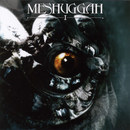

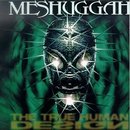
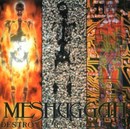
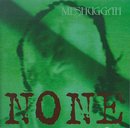







Formed in the college town of Umeå in northern Sweden in 1987, MESHUGGAH have spent the last twenty years and cumulative thirteen releases developing, exploring, and redefining their complex, inimitable approach on the art of expressing their collective Id. An entity that has not sounded like anyone else in over thirteen years, MESHUGGAH are one of the few purely and honestly lateral-thinking forces genuinely dedicated to pushing the boundaries of extreme music simply because doing so comes naturally to them. Unafraid to take risks and tackle new experiences, they create albums you can listen to six years later and still discover things you never noticed before. The mystical lore surrounding them pertains to their mathematical execution of odd-cycle time signatures shifting around common 4/4 time. As a result, it isn’t shocking to see some of the biggest names in metal standing in the wings at MESHUGGAH shows, shaking their heads at the band’s majestically demented, down-tuned, groove-laden, and precisely performed polyrhythms that never veer out of control. Devotees include Tool, The Deftones, Kirk Hammett & Lars Ulrich of Metallica, Rob Halford of Judas Priest, James LaBrie of Dream Theater, and Boston’s prestigious Berklee College of Music, which incorporates MESHUGGAH’s back catalogue into their curriculum, fortifying the belief that such perfectly calibrated music adds a crucial ingredient to a modern musical education. While the band’s self-assured beginnings speak plainly, they had no idea their future contributions to music would be the sonic equivalent of what Sir Isaac Newton did for the development of calculus.
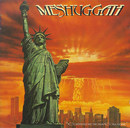
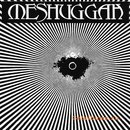
In 1989, with a line-up that included Jens Kidman on vocals & guitar, Fredrik Thordendal on guitar, Peter Nordin on bass, and Niklas Lundgren on drums, MESHUGGAH’s self-titled thrashy, virgin release (which came to be known as Psykisk Testbild due to the album’s artwork) was self-released on vinyl and limited to 1,000 copies. Every copy sold. In 1991, their full-length debut album, Contradictions Collapse, heralded the arrival of drummer extraordinaire, Tomas Haake, and the band’s obvious nod to vintage Metallica was a potent indicator of the barely-contained violence fermented within. But it was in 1995 - one of Swedish metal’s most significant years in terms of influential releases – that the myth of MESHUGGAH gained momentum. Produced by a 21-year-old Daniel Bergstrand at Soundfront Studios in Uppsala, Sweden and consisting of equal parts instinct, inspiration, and natural talent, Destroy Erase Improve provided positive proof that the band had tapped a truly multi-dimensional, divergent vein. Joined by rhythm guitarist Mårten Hagström in 1994 for the recording of the None EP (freeing Kidman from those duties) and marking the beginning of the band’s own identity, DEI was released to the sound of dropping jaws among their growing number of fervent followers and was a literal showcase of how far the band could push their ideas. Subsequently, it has been lauded as one of heavy metal’s most masterfully evolutionary albums and hailed as MESHUGGAH’s finest hour. Drum! Magazine praised it for its “ridiculous, driving, brutal insanity.” Ranking #12 in Revolver Magazine’s “69 Greatest Hard Rock Albums Of All Time,” it recently became the 21st album inaugurated into Decibel Magazine’s pantheon of extreme metal – The Hall of Fame: “These mad scientists have obliterated the existing paradigms of death, thrash, and prog metal, upping the ante for heavy music to a level of mathematical profundity. A mind-bending masterpiece.”
“Intelligence,” states theoretical physicist Stephen Hawking, “is the ability to adapt to change.” When Peter Nordin developed an inner-ear nerve problem in 1995 that prevented him to continue with the group, MESHUGGAH recruited Gustaf Hielm to take over bass duties on 1997’s The True Human Design EP and 1998’s Chaosphere. The latter’s manic, bludgeoning rage collided head-on with blistering skill (“five technically virtuosic Scandinavian ogres using jackhammers to smash other jackhammers” cited Spin Magazine), and the result was a masterclass in aggression leading Rolling Stone to rank MESHUGGAH as one of music’s “10 Most Important Hard and Heavy Bands.” In 1999, MESHUGGAH played at the Milwaukee Metal Fest, a week of dates with Cannibal Corpse, toured supporting Slayer, and were then handpicked to play eleven shows as direct support for Tool’s U.S. arena tour in 2001. In a serendipitous, Hollywood-styled turn of events, music from Destroy Erase Improve aired during prime time television on MTV’s reality series The Osbournes (albeit for the sole purpose of tormenting their neighbors of obviously weaker musical constitution), courtesy of Jack Osbourne. While the Swedes prided themselves in not being a commercially accessible band, they were invited to be featured guests on Ozzfest 2002’s 2nd Stage. MESHUGGAH accepted, and the race was on to complete the new album.
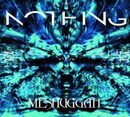
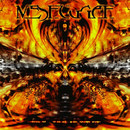
After pushing the limits of heaviness with Chaosphere, there was only one place left to go: even heavier. Thordendal & Hagström made the leap to custom-built 8-string Nevborn guitars and thereby inherited a new musical vocabulary to work with. Abandoning the use of chords and almost exclusively utilizing single notes and slowing their pace to sub-aquatic meanderings, the subdued result was a lethal dose of self-professed “concentrated evil,” Morse-code solos courtesy of Thordendal, and a lot of low-end. Completed just two days prior to the band leaving Sweden to join Ozzfest, the darker, more sinister, and all-encompassing menacing vibe of Nothing was doused in accolades. “The magnum opus of controlled insanity,” wrote Terrorizer. “One of the most inventive metal albums to arrive in some time,” praised Guitar One. “Nothing,” boasted Tool drummer Danny Carey, “is another prime example of MESHUGGAH’s musical expertise and unique compositional style that continues to evolve and change the way people listen to music.” In light of the showers of praise, the Swedes were still not prepared when news broke of Nothing landing on the American Billboard Top 200 chart – a first for a band on Nuclear Blast’s roster and one of the most extreme albums ever to achieve that feat at the time. Following their participation on Ozzfest, MESHUGGAH once again hit the road with Tool, and ultimately sold 100,000 copies of their fourth full-length recording.
It would be three years before the next studio album surfaced, but in the interim, kudos for the band kept coming. In 2004, Alternative Press voted MESHUGGAH “The #1 Most Important Band In Metal.” “MESHUGGAH have carved out their own niche as one of the most innovative and challenging extreme acts of our generation.” That same year, Fredrik & Mårten ranked #35 in Guitar World’s list of “100 Greatest Metal Guitarists.” “Over the polyrhythmic percussive madness of drummer Tomas Haake, Hagström & Thordendal create crushing, machine-gun riffs that are convoluted rhythms in themselves, as well as fluid, sublime, Allan Holdsworth-style solos.”
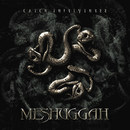
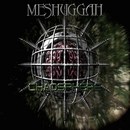
Such furiously mesmerizing music obviously requires its share of discipline. Each year without a release becomes inversely proportional to the climbing expectations among MESHUGGAH fans for the band to out-do themselves. Tackling a dark musical landscape while addressing the subjects of contradiction, paradox, negation, and the inevitability of clashing opposites with all the tension that results from it, MESHUGGAH’s studio offering for 2005 was a 47 minute-long “uni-song” divided into four quasi-movements (or thirteen suites, depending on your personal interpretation). An audio exam in patience and endurance, Catch Thirty Three offered a reward only to those who were insistent on completing the journey through this warped, metaphoric dream state. Obviously mastering the 8-string guitars that were prototypes on the previous album, MESHUGGAH tapped into the hypnotic power of repetition, suggesting a lot of visual imagery and movement. Proudly cold and emotionless, this “concept album without a concept” with seemingly stream-of-consciousness vocals had the feel of a philosophical journey through life and death, not excluding the soul-gutting ponderations. Again, the praise was incessant. “Catch Thirty Three could be the soundtrack to the darkest, strangest, heaviest movie never made,” held Revolver. “Catch Thirty Three lifts MESHUGGAH’s work to unreachable levels,” commended Guitar World. “One of the most brilliant metal discs in recent years,” raved Guitar One. It went on to become Terrorizer Magazine’s Album of the Year for 2005. What’s more, while the band’s discography underwent scholarly analysis at the 34th Annual Meeting of The Music Theory Society of New York State in 2006, MESHUGGAH remixed and remastered Nothing at their own Fear And Loathing Studio in Stockholm, Sweden to finally re-offer it to fans sounding “the way we always wanted it to!” In the latter half of 2007, the article “Re-casting Metal: Rhythm and Meter in the Music of MESHUGGAH,” appeared in a volume of Music Theory Spectrum, the journal of The Society for Music Theory.
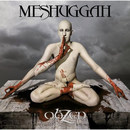
Mercifully, the wait for the sixth installment in MESHUGGAH’s quest to a) continuously experiment; b) avoid predictability; and c) offer a dose of consistency will only clock in at 1,015 days. Recorded and mixed at Fear And Loathing Studio and featuring artwork by Joachim Luetke (Dimmu Borgir, Arch